
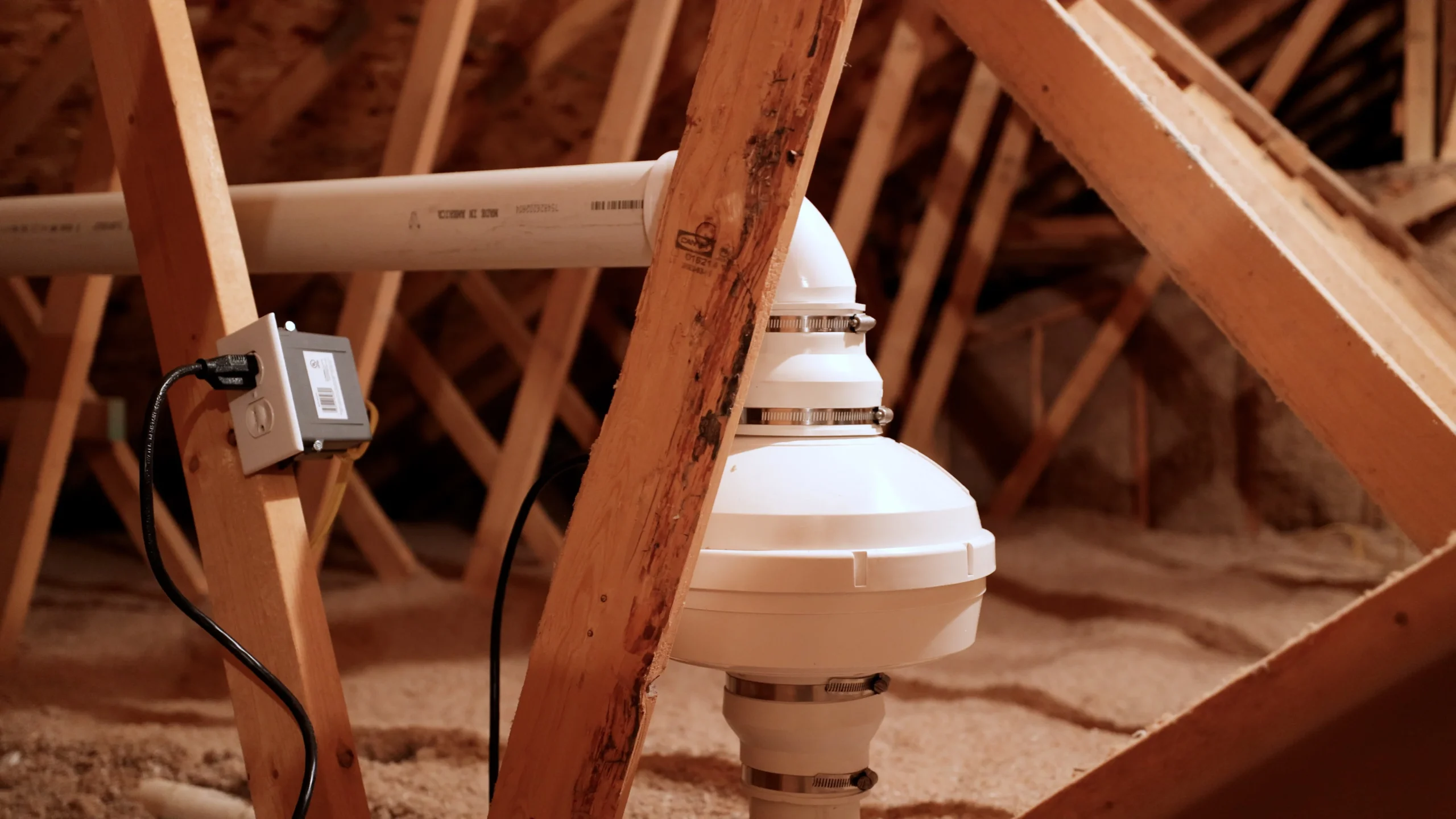
Does this symptom mean the fan needs replacing?
Describe what changed before buying a part. A new vibration, a silent fan and an unfamiliar gauge reading can lead to different investigations. An inspection should distinguish a fan fault from a power, connection or wider system issue.
| Observation | Useful service information |
|---|---|
| Fan seems stopped | When noticed, known power interruption, normal operating sound |
| New noise | Location, frequency and a short recording from a safe position |
| Gauge changed | Photo and the documented normal reading, if available |
| Radon test rose | Complete report, measurement dates and recent changes to the home |
Do not climb to photograph inaccessible equipment or open electrical components. Our radon fan noise guide helps organize observations without treating every sound as a failed motor.
Does a normal manometer mean my radon is low?
No. A U-tube manometer indicates a pressure difference in the system; it is not a radon concentration measurement. Compare it with the installer’s documented baseline and ask about a change. One system’s normal reading is not a universal target for another.
If it reads zero, record the observation and request assessment rather than assuming a particular replacement will solve it. Keep the existing operating instructions available. Our guide to signs a radon system needs assessment helps organize the next step. A separate radon test provides the indoor concentration needed to evaluate exposure and the result of the work.
How long should a radon fan last?
There is no fixed replacement birthday. EPA notes that fans may last five years or longer; that is background guidance rather than a promise about a particular unit. Installation conditions, model and symptoms matter when assessing an individual fan.
Collect the original invoice, model number and warranty paperwork. An older unit may still operate, while a newer unit can need investigation. Ask the service provider to explain the fault found and whether the proposed repair is covered by any applicable written warranty. Do not assume the entire installation shares the fan manufacturer’s coverage.
How should I compare replacement quotes?
Compare the scope alongside the total. A component-only listing cannot establish the installed cost at your property. Ask each contractor to name the proposed fan and explain how it was selected for the existing system.
- Diagnosis and any inspection charge.
- Fan model, couplings and mounting work.
- Piping or sealing corrections included in the job.
- Electrical work and who is responsible for it.
- Removal of the old component and access limitations.
- Warranty terms and the post-repair testing arrangement.
Manufacturer performance curves illustrate why connection diameter alone does not establish equivalent performance. Air Sense confirms the proposed model and job scope after assessment; this page does not promise a stocked model or a universal price.
Can I replace the fan myself?
Fan replacement involves electrical equipment, sealed connections and selection for the system’s pressure and airflow requirements. Follow the applicable manufacturer instructions and local requirements. A general ventilation fan is not a substitute chosen solely because it fits the pipe.
If you cannot establish the fault, electrical scope or installation requirements, arrange professional assessment. Do not bypass a protective device or change wiring as a troubleshooting shortcut. A radon system inspection can also address whether the fan is the only component needing attention.
How do I verify the work afterward?
Ask the contractor to document the installed model, completed repairs and expected system indication, then keep that record with the operating instructions. Agree on the radon test method and timing before the service appointment ends. A quieter motor or restored gauge reading alone does not verify the indoor result.
EPA recommends ongoing operation of fan-based mitigation systems and periodic retesting; its system guidance suggests retesting at least every two years. Ask how a repair or later building change affects your testing plan. Record any subsequent service beside the results so a future technician can understand the history.
What does Air Sense provide?
Air Sense’s published service includes fan replacement on systems installed by other companies. The installation photographs on this site show actual Air Sense work, while the assessment of your system establishes your repair scope. Call 314-664-9807 with the address, symptoms and available records. Confirm access, appointment timing and what the service charge includes.
Questions before you book
Should I switch the fan off when it is noisy?
A fan-based mitigation system is intended to operate continuously. Contact the service professional about the noise and follow equipment safety instructions rather than choosing an arbitrary on/off schedule.
Will a new fan replace the entire system?
Not necessarily. Ask the proposal to distinguish component replacement from any additional piping, electrical or other corrective work.
Do I need a radon test after repair?
Arrange a verification plan with the professional. Mechanical operation does not measure the indoor radon concentration; keep the resulting report with the repair record.