
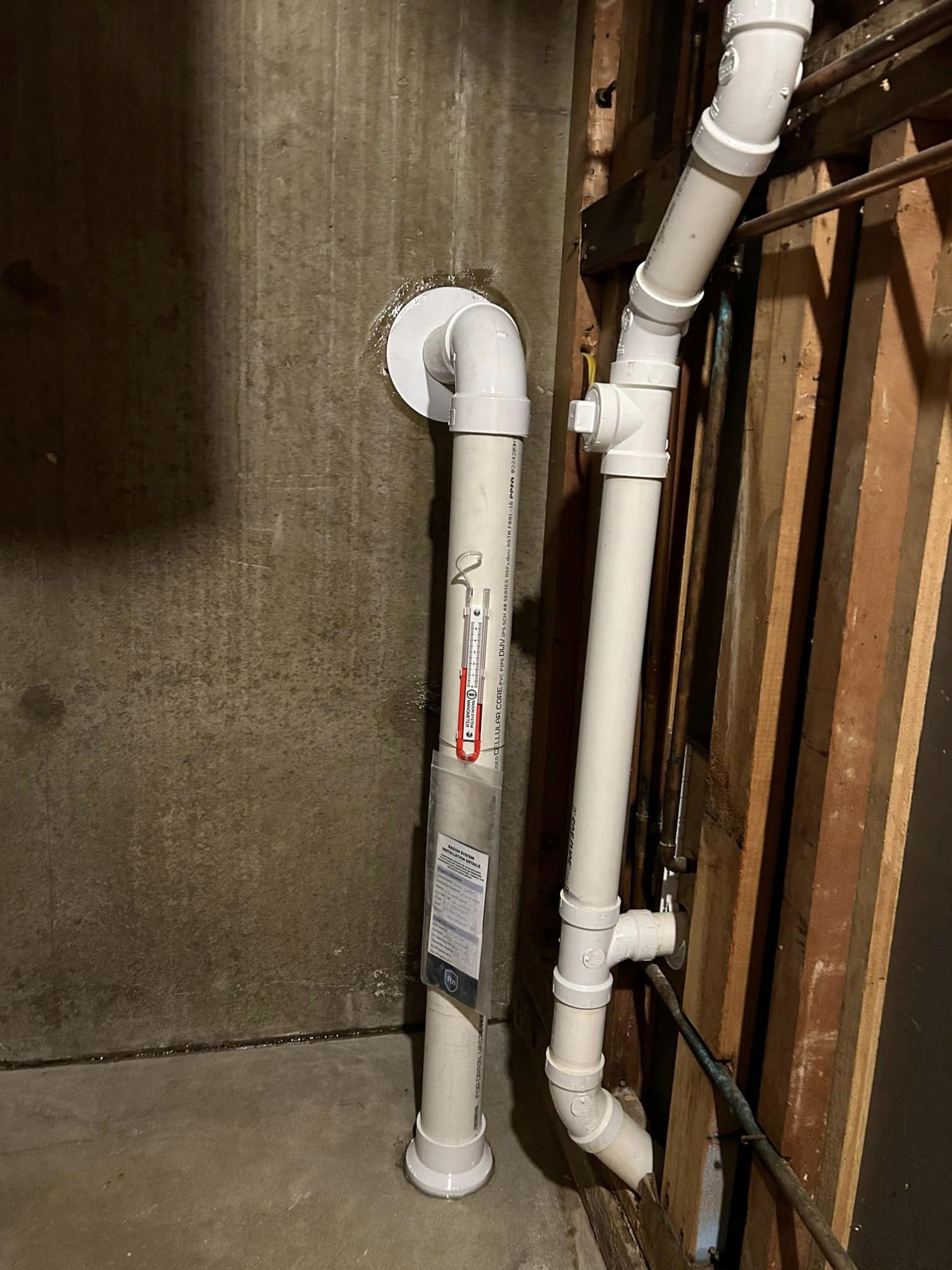
What should my radon manometer read?
Your radon manometer should be compared with the normal operating reading recorded for your system. There is no single correct number for every house. Fan selection, soil conditions and pipe layout create different operating conditions.
Read the vertical distance between the fluid surfaces using the printed scale. For example, a surface 0.4 above zero and another 0.4 below zero represent a difference of 0.8 scale units. Confirm the units on the gauge, commonly inches of water column. This example explains the arithmetic; it is not a target reading.
- Stand where the scale is clearly visible.
- Photograph both fluid levels together.
- Look for the installer's marked operating value.
- Compare like units rather than only the printed numbers.
What does it mean when a radon manometer reads zero?
A zero difference means the gauge is not showing a pressure difference at that moment. A stopped fan is one possible cause, but disconnected or damaged gauge tubing can also affect the indication. Do not assume that changing the liquid will solve it.
Note whether the fan appears to be operating from an accessible location and whether the small sensing tube looks disconnected. Leave equipment changes to the service assessment when you do not have the correct instructions.
- Record whether the reading changed suddenly.
- Mention any power outage or recent work.
- Send the photo with the service request.
What does a high manometer reading mean?
A high manometer reading means a greater pressure difference at the gauge, not necessarily better radon reduction. The important question is whether it differs from this system's established condition. A changed reading needs context from the fan, piping and the gauge itself.
Do not adjust fan speed or restrict piping simply to reproduce a number found online. Tell the technician about other changes, such as new noise, visible damage or recent construction. A photograph of an older normal reading can be useful alongside the current one.
Does the manometer tell you the radon level?
No. A manometer is a pressure indicator, while a radon test measures gas concentration in pCi/L. A familiar gauge reading can help you notice whether equipment operation has changed; it cannot establish the concentration in occupied rooms.
Keep the indoor test report and the operating reading in separate fields in your records. If a test result is elevated even though the gauge looks normal, ask for a system assessment rather than treating the indicator as proof that the test must be wrong.
- Gauge record: date, pressure units and observed reading.
- Radon report: test dates, location and concentration.
- Service record: findings, changes and revised baseline.
How do you top up or replace manometer fluid?
Use the manometer manufacturer's specified fluid and instructions for its exact model. Fluid properties and zero adjustment affect what the gauge displays. RadonAway, for example, identifies model-specific operating ranges and an adjustable zero on its Easy Read gauge.
Do not top up with an improvised substitute or reposition the scale merely to hide a changed reading. If liquid is missing, discolored or outside the useful scale, ask whether the gauge or tubing needs service. The correction should leave a readable indicator with a documented reference value.
Questions before you book
Is 4 on a manometer the EPA action level?
No. The gauge and a radon report use different measurements. The EPA action level is a radon concentration, not a manometer pressure value.
Can I send a gauge photograph for service?
Yes. Contact Air Sense Environmental at 314-664-9807 and provide a clear photo of the full scale, both fluid levels and any system label.