
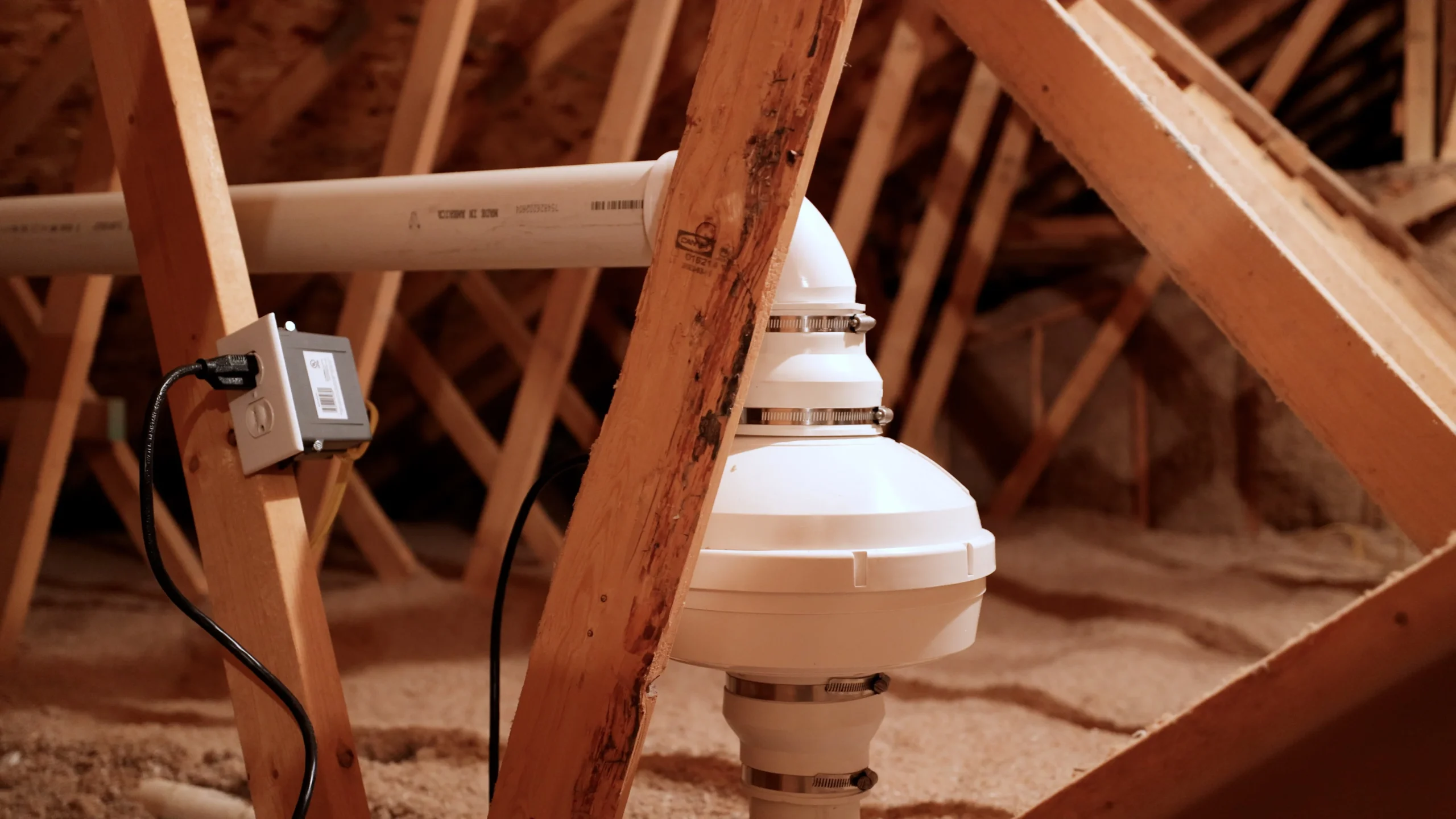
How long do radon fans last?
Radon fans do not have a single guaranteed replacement age. EPA says fans may last five years or more. Operating conditions, the particular model and the condition of the installation affect when service becomes necessary.
Use age as background information, then look at the actual symptom and system assessment. A fan that recently became noisy deserves attention even if it is young. An older fan does not prove that the current indoor radon level is high.
- Find the installation date or an earlier service invoice.
- Check the written warranty instead of assuming coverage.
- Keep prior radon results available for comparison.
What are the signs a radon fan needs replacing?
A stopped fan, a new mechanical noise or an altered system indication can justify a replacement assessment. None proves that a new motor is the only work needed. A loose connection, power issue or other system fault can produce overlapping symptoms.
Describe what you hear and when it happens. A short recording made from a safe location is more useful than guessing a part name. Include the gauge reading and whether any recent work was done near the system.
- Has the normal fan sound disappeared?
- Did a rattle or vibration start suddenly?
- Has the gauge changed from its marked baseline?
- Did a recent indoor radon test rise?
How much does it cost to replace a radon fan?
The cost to replace a radon fan depends on the selected fan, installation access and any related work. Air Sense quotes the job after reviewing the system. This site does not publish a replacement range because a component price alone omits labor and property-specific work.
Ask for a quote that names the proposed scope and explains anything excluded. Make sure you understand whether the work includes couplings, piping changes, electrical coordination or a separate radon test.
- Confirm the replacement model in the proposal.
- Ask whether existing mounting needs correction.
- Clarify the warranty and any registration requirement.
Can you replace a radon fan yourself?
A homeowner should not treat fan replacement as a simple pipe-size match. The work involves electrical equipment, sealed connections and fan selection for the system's pressure and airflow requirements. Manufacturer instructions and local requirements govern the installation.
If you are considering doing the work, establish the required qualifications, electrical scope and verification plan first. Do not substitute a general ventilation fan or bypass a fault. A professional assessment is the practical next step when the fan is inaccessible or the cause is uncertain.
Which radon fan models do we install?
The fan model should be specified after reviewing the existing system. RadonAway publishes performance curves because different models deliver different airflow at a given pressure. A matching connection diameter does not establish equivalent performance.
Air Sense can confirm the proposed brand and model in your quote. This page does not claim a complete stock list or promise that a named model is available. Send the old label and recent system details so the replacement discussion starts with the equipment you actually have.
Questions before you book
Do you replace fans installed by another company?
Yes. Air Sense's published fan service includes systems installed by other contractors. The scope is confirmed after assessment.
Does replacing the fan replace the entire system?
Not necessarily. The review should distinguish a fan fault from problems with other components and explain which parts need work.
How do I request a fan replacement quote?
Call 314-664-9807 with the property address, fan model if readable, symptoms and photographs of safely accessible equipment.